

The Boys in
the Boat
Fantasy Greens was delighted to contribute to George Clooney’s The Boys in the Boat, a film that captures both the grit of Depression-era America and the triumph of the human spirit on the international stage. Our role was to bring natural detail and atmosphere to key locations, enhancing the visual storytelling with authentic landscapes and greenery.


Hooverville
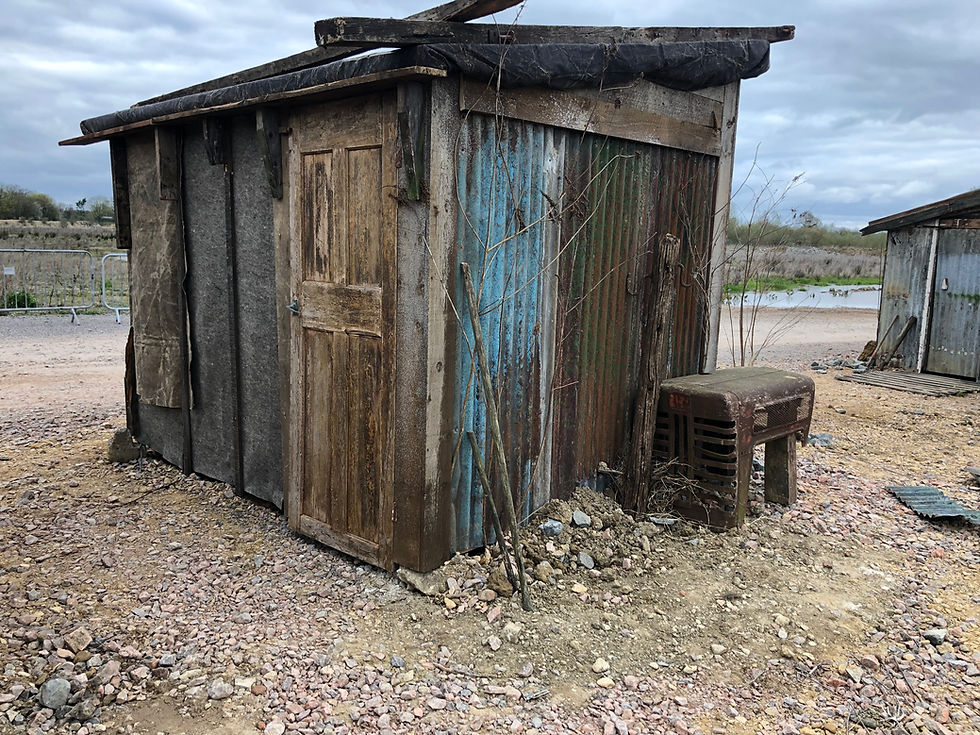
The Hooverville set was one of the most striking environments we helped bring to life, capturing the hardship and resilience of Depression-era Seattle.
Our focus was primarily on the ground cover, ensuring the surfaces felt gritty, uneven, and authentic to the period. We layered dirt, ash, and rubble across the site, blending gravel, scattered stone, and worn pathways to suggest a space shaped by makeshift living and constant use.
Care was taken to create safe yet convincing areas of mud and compacted soil, giving the set a tactile realism that supported the performances; transforming a simple surface into an evocative canvas that reflected poverty, struggle, and endurance.




Shell House
The Shell House was a pivotal location in The Boys in the Boat, serving as the heart of the team’s training journey. Our role was to help ground the building in its natural surroundings, ensuring the setting felt authentic to the Pacific Northwest of the 1930s.
Situated at the heart of the team’s journey, the brief was to create an exterior that felt authentic while also enhancing the visual connection to the natural landscape of the Pacific Northwest.
We laid turf and carefully integrated patches of greenery around the boathouse, softening the hard lines of the timber structure and anchoring it within its riverside environment. Subtle plantings along the approach and at the water’s edge added depth, while open grassed areas gave the set a sense of space and collegiate atmosphere.


River Banks
The riverbanks of The Boys in the Boat provided both the backdrop for the team’s training and the stage for their triumphs on the water.
Our work focused on shaping these environments so they felt authentic to the 1930s while supporting the film’s cinematic atmosphere.
We layered turf and natural ground textures along the edges of the rivers, adding clusters of greenery to break up the lines between land and water. Selective plantings and reeds were positioned to soften transitions, giving each location its own distinct character; from the rugged, working stretches near the Shell House to the more open and expansive banks used in the regatta scenes.
Careful attention was paid to scale and density, ensuring the banks framed the rowers without overwhelming the action on the water.


Theatre
For the theatre sequence, our work was concentrated entirely on the stage itself.
The sculptural form of the tree acted as a dramatic anchor, while the brittle textures of the branches and foliage gave the scene a stark, evocative quality.
Together, these elements created a mood that was both atmospheric and symbolic, allowing the stage to resonate with a sense of desolation and poetry.


